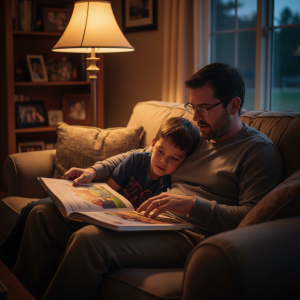
 Teaching children to read is essential. Yet once a child becomes a confident reader, a parent’s role is far from finished. The challenge then shifts from teaching reading to sustaining it. After all, if children stop reading, much of that early effort is lost.
So how do we keep them reading? There are countless approaches, but I want to highlight just one that proved especially effective for me: read the same books your child is reading.
This strategy works best once children move beyond picture books and begin tackling chapter books. At the picture-book stage, parents should focus on guiding and supporting the act of reading itself. But once chapter books enter the picture, parents can join in by reading those same titles. Doing so sends a powerful message: you value reading, and you value their reading choices.
Yes, this may mean diving into Amelia Bedelia or working your way through stacks of Captain Underpants. But don’t worry, those playful stories are stepping stones. They open the door to richer, more rewarding books down the road.
In my own home, this practice has taken me on some unexpected journeys. Because of my daughter, I’ve read through entire young adult series—Harry Potter, Wings of Fire, and more. These weren’t necessarily books I would have picked up on my own but reading them alongside her gave us a shared world to talk about. We laughed at the same characters, debated plot twists, and sometimes even disagreed about which book in a series was the best. I want to mention that I didn’t read ALL the series she read, most notably a seemingly endless series of books about warring cats. And that’s…OK.
And now, as her reading has matured, after many young adult books, we’ve stepped into the classics together. This has been a joy for me—not only revisiting books I hadn’t opened in years, but also discovering classics I somehow missed the first time around. It is such a treat to watch her enjoy books I’ve read before as well as read books she discovered and shared with me. I’ve yet to convince her to take on Les Misérables, but I will someday!
What’s remarkable is how often reading the same books leads to meaningful conversations. A chapter in Harry Potter sparks a talk about courage and friendship. A passage in To Kill a Mockingbird opens the door to discussions about justice and empathy. Reading together creates a natural bridge to deeper dialogue—about values, history, and the human experience.
Children notice what we value. When they see us reading their books, they see that their choices matter. When they see us continuing to read—even books outside our comfort zone—they learn that reading isn’t just a skill, it’s a lifelong habit. And when we talk about books together, they discover that reading is more than words on a page—it’s a way to connect, to think, and to grow.
So yes, teach your children to read. But don’t stop there. Keep reading with them, even when they don’t need your help sounding out the words. You may find, as I have, that the journey of reading together is one of the most rewarding parts of parenting.
